Perimenopause bloating usually eases with a few steady changes: a short walk after meals, smaller dinners, treating constipation if you’re backed up, and adding soluble fiber slowly. For fast relief, enteric-coated peppermint oil has the best trial evidence. Probiotics help some women and not others. Bloating that never goes down needs a doctor.
You’ve already done the reasonable things. The peppermint tea. Cutting bread for a month, then dairy. The probiotic that cost more than your phone bill and did, as far as you can tell, nothing. Maybe a low FODMAP app you abandoned in week three because dinner had become a spreadsheet.
And you’re still bloated. Not after one bad meal. Most days. The jeans that button at seven in the morning and dig in by four. The dress you stopped wearing because by evening you look five months along, and someone once asked.
I’m Nina. I spent nineteen years in quality control for fermented dairy, culture counts and shelf life, and at 43 my own gut went sideways. This is the page I wanted then. It’s sorted by what you’re actually trying to do: get through tonight, get through the month, and figure out whether any supplement is worth the money.
Why am I so bloated all the time now?
Because the hormones that set the pace of your gut are swinging, and a slower gut holds gas and stool longer. Estrogen and progesterone both affect how fast food moves through you. In perimenopause they rise and fall unpredictably, so your digestion can feel fine one week and swollen the next.
Three things tend to stack up. Transit slows, so gas sits in the bowel longer and ferments more. Water balance shifts with estrogen, which is the puffy, tight feeling that isn’t really gas at all. And many women get more sensitive to normal amounts of gas, so a volume that never bothered you at 35 now feels like pressure.
You’re not imagining the timing either. In an online survey of 564 women aged 44 to 73, presented by UK dietitian Nigel Denby at The Menopause Society’s 2025 meeting, 77% reported bloating, and 82% of those with gut problems said they started or got worse around menopause. It’s a preliminary survey, not a trial. It also matches what every perimenopause forum says out loud.
If you want the full mechanism, progesterone is a large part of why things slow down. This page is about what to do with it.
How do I get rid of perimenopause bloating fast?
Move, then use heat, and if it’s a regular problem, consider enteric-coated peppermint oil. Those are the quick options with the most behind them. Nothing makes a swollen belly go flat in ten minutes, and anything sold as “instant” is selling the word.
Walk for 10 to 15 minutes after eating. Gentle movement helps gas leave the bowel instead of pooling. A 2006 study in the American Journal of Gastroenterology found that mild exercise during a gas infusion reduced gas retention and symptoms in people who complained of bloating. It was a small lab study. It’s also free, and it works on the day you need it.
Heat on the belly and loose clothing help with the discomfort, even though they don’t change the gas itself. Lying on your left side with knees bent is what a lot of women swear by. I couldn’t find a single study on it. I do it anyway.
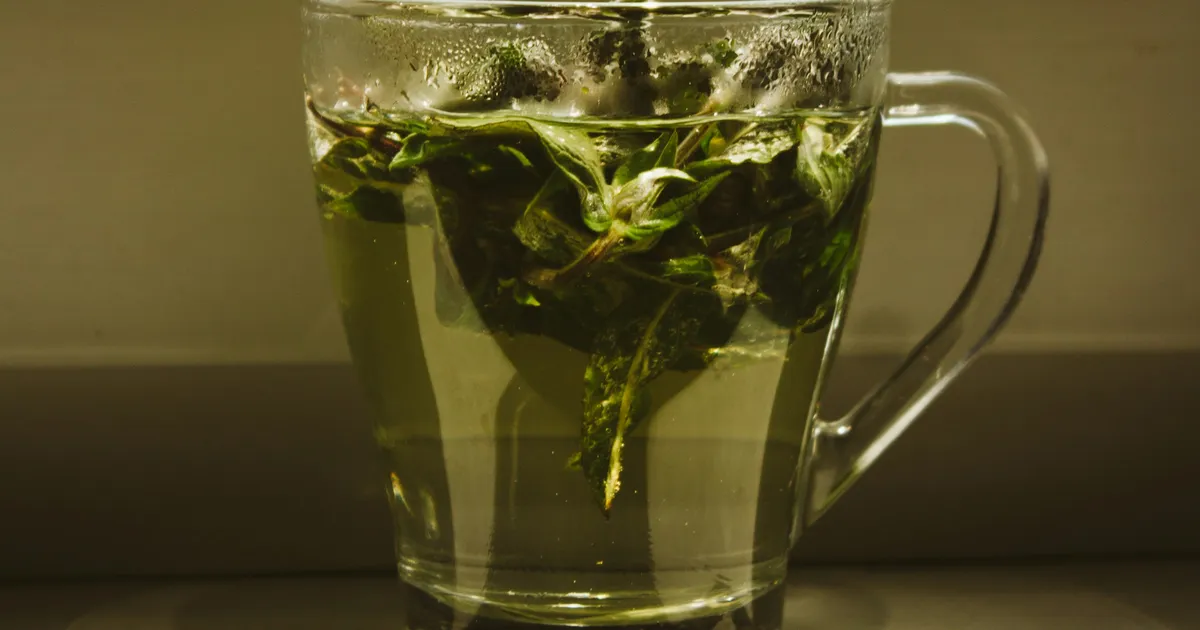
Peppermint oil is the over-the-counter option with real numbers. A 2019 meta-analysis by Alammar and colleagues pooled 12 randomized trials with 835 people and found peppermint oil about 2.4 times as likely as placebo to improve overall gut symptoms. The trials used enteric-coated capsules that open in the intestine. Peppermint tea isn’t the same thing, which may be why the tea did so little for you.
Simethicone, the gas-relief chewable at every pharmacy, is harmless and some women like it after a big meal. The evidence that it helps bloating is old and thin. Try it once, and if nothing changes, stop buying it.
How do I reduce bloating day to day?
Work on the backlog first. If you’re going less than once a day or straining, constipation is very often what’s behind the bloating, and fixing it does more than any tea or pill. After that, change how you eat more than what you eat.
Here’s what tends to help over a few weeks:
- Deal with constipation. Magnesium oxide has trial support for chronic constipation, per a 2023 review by van der Schoot and colleagues. More on that pattern in constipation in perimenopause.
- Eat dinner smaller and earlier. Evening is when the swelling peaks for most women, so the biggest meal at 8pm adds to the worst hour.
- Add soluble fiber slowly. Psyllium is the type gut specialists recommend. Fast, fermentable fiber like inulin or chicory root, common in “gut health” bars, can make bloating worse. Fiber in perimenopause has its own catch.
- Cut the fizz and the gum. Carbonated drinks and chewing gum both add swallowed air. Sugar-free gum also adds sorbitol, which ferments.
- Eat slower. It sounds like advice for a child. Gulping meals is still one of the easiest ways to swallow air.
What I’d skip: cutting more foods. If you’ve already gone gluten-free and dairy-free with no change, another elimination is unlikely to be the answer. Here’s why cutting more rarely helps, and why low FODMAP failing tells you something useful.
What’s the best supplement for perimenopause bloating?
There isn’t one best supplement. The right choice depends on what your bloating is attached to. Gassy and crampy points one way, backed up points another, and a puffy, watery swelling before your period points somewhere else again. Matching the supplement to the pattern matters more than the brand.
| If your bloating is mostly… | What has the most evidence | How strong |
|---|---|---|
| Gas, cramping, pressure | Enteric-coated peppermint oil | Strong |
| Backed up, hard stools | Magnesium oxide, psyllium | Mixed |
| Worse after beans or dairy | A food-specific enzyme (lactase, alpha-galactosidase) | Thin |
| General, no clear pattern | A probiotic with named, studied strains | Mixed |
| Puffy before your period | Nothing well tested yet | Anecdotal |
Broad “digestive enzyme blends” are the category I’d be most skeptical of. Lactase helps if dairy is your trigger. An enzyme for bean sugars helps with beans. A capsule with twelve enzymes in it has mostly been tested by the people selling it.
Do probiotics help perimenopause bloating?
Sometimes, and it depends heavily on the strain. Some women notice a real change within a month. Others take one for a year and feel nothing. Both are normal results, and “probiotics” covers products as different from each other as aspirin and antibiotics.
Here’s the part the probiotic ads skip. The American College of Gastroenterology’s 2021 IBS guideline recommended against probiotics for overall IBS symptoms, rating the evidence very low quality. That isn’t a verdict that they never help. Studies mixed so many different strains and doses that the results canceled out.
From my years counting cultures: a label that only says “10 billion CFU” without naming the strains, or that counts at manufacture instead of at expiry, tells you very little. If you try one, give it four weeks, change nothing else, and keep notes.
How long does perimenopause bloating last?
For most women it eases after periods stop and hormones settle, though nobody has a clean timeline. Perimenopause itself lasts about four years on average and can run closer to ten. The bloating tends to be worst in the most erratic years, when hormones swing hardest, rather than after menopause.
That’s the honest answer, and it’s an unsatisfying one. No study has followed bloating in the same women from early perimenopause to a year after their last period. If someone gives you a number of months, ask where it came from.
Is it bloating or menopause belly fat?
Bloating comes and goes within a day. Fat doesn’t. If you’re flatter in the morning and bigger by evening, that swing is bloating. If your waist measures the same at 7am and 7pm and has crept up over months, that’s a change in where your body stores fat.
Most women have some of both, which is why it’s confusing. A tape measure morning and evening for a week settles it. Here’s how to tell the two apart, and why the daily swing is real and measurable.
When is bloating something to worry about?
When it never goes down, or when it’s new and comes with other changes. The UK’s NICE guideline on ovarian cancer tells doctors to test women, especially those over 50, whose bloating is persistent or happens more than 12 times a month. Feeling full quickly, pelvic pain or needing to pee more often add to that.
Also see a doctor for blood in your stool, weight loss you didn’t try for, vomiting, trouble swallowing, or any bleeding after your periods have stopped. Most bloating is hormonal and harmless. That’s exactly why the rare serious kind gets missed, and asking for a simple blood test is not overreacting.
What this looks like in practice
- Track for one week first. When does it start, what time is it worst, and how often are you going? That one week tells you which row of the table above is yours.
- Fix the backlog. If you’re backed up, start there. It changes more than anything else on this page.
- Walk after dinner, every night. Ten minutes. Make it boring and automatic.
- Move fiber to psyllium, slowly. Half a teaspoon to start, more over two weeks, with water.
- Try one supplement at a time. Four weeks each, nothing else changing, notes kept. Two at once and you’ll never know which one did it.
- Book the appointment if it never goes down. Say the words “persistent bloating” and “perimenopause” out loud. You may have to be the one who says the second one.
Common questions
Why is my perimenopause bloating worse at night?
Gas and fluid build up over the day as you eat, sit and swallow air, and slower transit in perimenopause means less of it clears between meals. Most women are flattest when they wake and biggest by evening. A smaller, earlier dinner and a walk afterward target that build directly.
Can perimenopause bloating make me look pregnant?
Yes, and it’s one of the most common descriptions women use for it. The swelling comes from gas, stool and fluid sitting in the bowel, plus abdominal muscles that relax in response. If it goes down overnight, that pattern fits bloating. If it never does, see a doctor.
Does HRT help or make bloating worse?
It can go either way. Some women find bloating settles once hormones are steadier, and others notice more bloating at first, especially with the progesterone part. That’s a conversation for your doctor, not a reason to start or stop anything. What the research shows on HRT and bloating.
Is it normal to be bloated every day in perimenopause?
It’s common, but daily bloating is still worth a closer look. If it eases overnight and comes with constipation or a cycle pattern, it’s most likely hormonal. If it never eases, or started suddenly after 50, ask for a blood test. Common doesn’t mean you have to live with it.
What’s the fastest home remedy for bloating?
A 10 to 15 minute walk, a heat pad, and loosening your waistband are the fastest things you can do at home. Peppermint oil capsules work over days rather than minutes. Teas and “flat belly” drinks sold as a quick fix mostly add caffeine or a laxative, which is not the same as relief.
Can magnesium help with perimenopause bloating?
Magnesium helps if your bloating comes from being backed up, since it draws water into the bowel and softens stool. It does little for gassy bloating without constipation. Start low, because too much causes diarrhea, and check with a doctor if you have kidney problems.
Once you’ve worked out that a probiotic is worth a try, the next problem is the shelf: two hundred bottles, all promising the same thing in different fonts. Here’s what the label won’t tell you, and how to read it anyway.
Fortylight is written by Nina Halvorsen, a food scientist, not a physician, dietitian, or licensed health professional. Nothing here is medical advice. Digestive symptoms can signal serious conditions. If you have blood in your stool, unexplained weight loss, persistent vomiting, difficulty swallowing, bleeding after menopause, or symptoms that began after age 50, see a doctor before trying anything on this site.